The Southeast Asia Aid Map — launched by the Lowy Institute in 2023 — is a comprehensive database tracking official development finance (ODF) flows in Southeast Asia. By promoting greater transparency of ODF flows, the Lowy Institute seeks to increase coordination, improve accountability, and strengthen decision-making and policy debate on aid, development, and geoeconomic competition in the region.
This third edition of the Southeast Asia Aid Map encompasses the period from 2015 to 2023. It includes data on more than 130,000 projects carried out by 109 development partners, totaling $290 billion. The research covers all 11 Southeast Asian nations: Brunei, Cambodia, Indonesia, Laos, Malaysia, Myanmar, the Philippines, Singapore, Thailand, Timor-Leste, and Vietnam.
The Map synthesises millions of data points from official reporting mechanisms and databases. It combines this with information from thousands of publicly available documents including annual reports, financial statements, budget documents, news media reporting, and social media sources. The resulting database is the most comprehensive account ever assembled of development projects in Southeast Asia.
The 2025 Key Findings report includes an analysis of Southeast Asia’s evolving development finance landscape. A series of profiles on each of the 11 Southeast Asian countries covered in the database is also available.
Understanding official development finance
Official Development Finance (ODF)
Public funds for the promotion of economic development and welfare of developing countries.
Official Development Assistance (ODA)
- Public or official source
- For the purpose of development
- Concessional
ODA consists of grants (donations that do not have to be paid back) and concessional loans (below market rate and on terms favourable enough to contain a substantial grant equivalent).
ODA is primarily provided to low-income countries with little capacity for repayments, or for projects that are unlikely to generate commercial returns.
Other Official Flows (OOF)
- Public or official source
- For the purpose of development
- Semi- or not concessional
OOF consists of financial instruments that do not meet ODA criteria. In Southeast Asia, it mostly includes loans that are provided on a semi- or non-concessional basis, meaning the finance is not on favourable enough terms to contain an adequate grant equivalent.
OOF is most commonly extended to middle-income countries with capacity for repayment.
Standards of concessionality are defined by the OECD’s “grant equivalent”. The income level of a recipient country determines the grant equivalent threshold. For example, for a transaction to a low income country to be considered ODA, the grant element must be 45%, while the threshold is 15% for a lower-middle income country, and 10% for an upper-middle income country.
Development partners explained
In terms of development finance, partners are commonly separated into two categories:
Traditional development partners
Southeast Asia’s traditional partners are governments, organisations, or entities that have a long-standing history of providing assistance and support to the region. These partners typically include established development partner countries such as the United States and Australia, international organisations such as the United Nations, and multilateral development banks such as the Asian Development Bank and the World Bank.
Non-traditional development partners
This group includes emerging partners who are not members of the OECD’s Development Assistance Committee, such as China, Saudi Arabia, Qatar, India, and Russia, as well as multilateral entities where non-traditional partners play a key role in their governance, such as the Asian Infrastructure Investment Bank and the Islamic Development Bank.
Reporting
The Southeast Asia Aid Map database is the most comprehensive ever compiled on Official Development Finance to Southeast Asia. However, there will always be development projects operating in the region that have either not been reported by development partners or otherwise publicly recorded. There may also be errors or inconsistencies in some of the data compiled for this project. In those respects, the map remains incomplete.
The Southeast Asia Aid Map team encourages users to provide us details on these gaps. Please do not hesitate to send us an email with information on any project that we can track down and include in the map.
Southeast Asia Aid Map Team
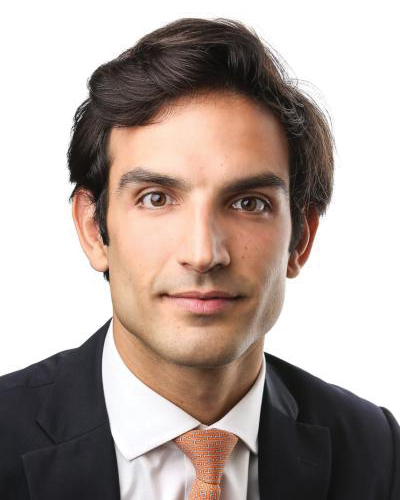
Alexandre Dayant is the Project Lead of the Southeast Asia Aid Map. He is a senior economist and Deputy Director of the Indo-Pacific Development Centre, a dedicated policy research centre within the Lowy Institute.

Grace Stanhope is a Research Associate in the Lowy Institute’s Indo-Pacific Development Centre. She holds a Bachelor of Politics, Philosophy and Economics and a Bachelor of Development Studies from the Australian National University.
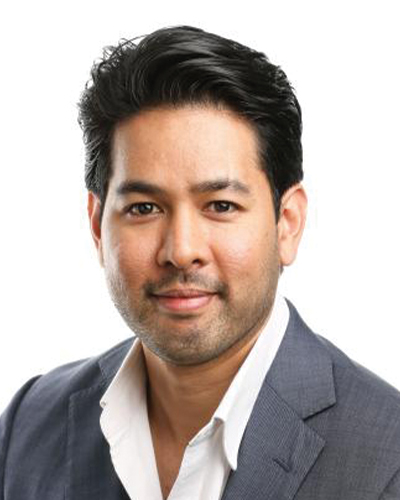
Roland Rajah is Director of the Indo-Pacific Development Centre, a dedicated policy research centre within the Lowy Institute. Roland also serves as the Lowy Institute’s Lead Economist, a position he has held since joining the Institute in 2017.
Acknowledgements
The research team would like to recognise the contributions to the project of former Lowy Institute colleagues Teesta Prakash and Ben Bland, who were deeply involved in the early development of the database.
In addition, the authors would like to express their gratitude to Hervé Lemahieu, Sam Roggeveen, Stephen Hutchings, and Clare Caldwell for their research, review, editorial, and design contributions,
Special thanks to colleagues Annalisa Prizzon and David Rosenfeld at the Overseas Development Institute for their peer review of the data-gathering methodology.
The Lowy Institute acknowledges and thanks the Australian Department of Foreign Affairs and Trade for its funding of this initiative.
The Southeast Asia Aid Map site was designed and built by Stephen Hutchings.